
Species and Finishes
Wood has a diverse palette of colors and patterns. Like all natural materials taking time to understand the variations in color, texture and grain allows designers to better apply wood specie choices throughout their specification and design journey. The selection of species is the single biggest factor in determining your design aesthetic. Understanding the differences between softwood and hardwood, solid and veneer, mixed grain and vertical grain, or certified wood and non-certified wood can greatly impact not only your design, but also your budget. You can read more about color variation in this article.
The complexities of these factors can be intimidating, but they don’t have to be. 9Wood will help guide you to the right species for your design intent, application, and budget. All the species options below are selected for their availability within the supply chain. Take a moment to familiarize yourself with a few different categories of species.
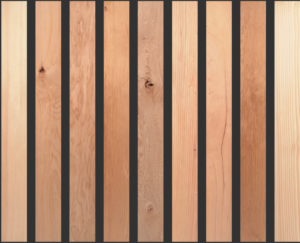
Solid Species
Three solid species, all tuned for ceiling-grade performance and predictable color results across a wide range of Custom Made Fast wood ceiling designs.
Western Hemlock Mixed Grain
Our most common solid wood species that is readily available in the Pacific Northwest. Western Hemlock is economical and complements an array of stain colors. It can be used in interior and exterior applications and has many benefits, including strength, workability, and sustainability.
Hemlock is a solid, blond softwood with beautiful texture and grain. Its basic hues are flaxen, and clear lumber means the wood is free of any dark knots. Many designers love hemlock’s light color and select a clear, low sheen finish to bring out its natural warmth. But hemlock is flexible. Our proprietary stain technology allows designers to transform hemlock into dark walnuts, warm honey oaks, or rich-hued cherry.









Species Color & Tone: Western Hemlock has a light, neutral base with subtle golden undertones. Its natural color ranges from a pale straw hue to a soft, warm brown, making it an excellent canvas for a wide range of stains—from light, natural finishes to deep, rich tones.
Grain & Appearance: In a mixed grain cut, growth rings are oriented in different directions, so you see a blend of straight grain and soft cathedrals. The result is a natural, slightly more expressive surface compared with vertical grain. Designers get a bit of movement and character without the visual noise of heavy knots. This look scales nicely from narrow linear planks to wide-format tiles and panels in lobbies, workplace, and education projects.
Why Designers Choose It:
Why Designers Choose It:
Western Hemlock is a highly versatile solid wood option, ideal for projects that require both aesthetic flexibility and durability. Its ability to take stain evenly makes it a practical choice for achieving customized finishes, while its natural strength and stability ensure longevity in architectural applications. Additionally, as a regionally sourced and sustainable species, it supports eco-conscious design without compromising performance.
- Good choice when you want real solid wood but need one of 9Wood’s most economical species.
- Ideal if you plan to use custom stain colors, from very light to quite dark, across a project.
- Better than Maple when you want the ceiling to feel a bit warmer and more naturally varied.
Hemlock is a solid, blond softwood with beautiful texture and grain. Its basic hues are flaxen, and clear lumber means the wood is free of any dark knots. Many designers love hemlock’s light color and select a clear, low sheen finish to bring out its natural warmth. But hemlock is flexible. Our proprietary stain technology allows designers to transform hemlock into dark walnuts, warm honey oaks, or rich-hued cherry.
Western Hemlock Vertical Grain
Vertical Grain Western Hemlock is a very light, calm solid species that supports clean, minimalist ceiling designs.
Species Color & Tone: Vertical Grain Western Hemlock offers a very light, neutral base that aligns with current preferences for pale, quiet woods. Its color typically runs from soft straw to light beige, with minimal contrast between sapwood and heartwood, which keeps the overall read remarkably consistent. This makes it a strong candidate when designers are chasing a clean, Scandinavian or Japanese-inspired palette in ceilings and walls.
Grain & Appearance: With vertical grain, Hemlock presents as fine textured and straight, with tight growth rings and only modest pin knots. The effect is a calm, linear field that does not compete with complex floor patterns or bold wall graphics. The stability of vertical grain makes it well suited for precise panel reveals, grille systems, and long spans where movement in the grain could feel distracting.
Why Designers Choose It:
Designers choose Vertical Grain Western Hemlock when they want the lightness and stainability of Hemlock combined with a more tailored visual than mixed grain. It takes transparent and custom stain colors very well, so it can be pushed warmer, cooler, or darker depending on project goals. In commercial practice, it frequently shows up in lobbies, hospitality spaces, and open offices that want a quiet ceiling material that still reads as natural wood rather than a synthetic look-alike.
- Ideal if you want a pale, neutral ceiling that still reads as natural wood, not laminate.
- Great platform for custom stains when you need to push the tone slightly warmer, cooler, or darker.
- Better than Maple when you want solid wood in the ceiling system and not just on trim.











Douglas Fir Mixed Grain
Douglas Fir is a warm, expressive softwood that brings a clear Pacific Northwest feel to feature ceilings.
Species Color & Tone: Mixed Grain Douglas Fir brings a warmer, more saturated story to the ceiling. Natural color ranges from light yellow and honey to richer reddish browns, with a visible contrast between earlywood and latewood that reads as soft striping once installed. In 9Wood’s offer, Douglas Fir sits at the premium end, reflecting the challenge of sourcing true ceiling-grade material, especially in longer lengths.
Grain & Appearance: Mixed grain Douglas Fir includes both flatter, cathedral patterns and more vertical grain segments in the same board. That combination creates a rustic-modern feel: refined enough for contemporary corporate interiors yet expressive enough for hospitality and cultural projects. The pronounced earlywood/latewood contrast lends itself to linear systems, where the grain rhythm reinforces the ceiling pattern.
Why Designers Choose It:
Designers choose Mixed Grain Douglas Fir when they want the ceiling to feel warm, crafted, and unmistakably Pacific Northwest. It works well in branded environments, universities, and public buildings that want a connection to regional timber species. Because ceiling-grade Fir is difficult to procure, it is often reserved for feature areas, key corridors, or signature volumes where the premium in cost and lead time is matched by design impact.
- Best when you want a richer, more saturated look than Hemlock and are comfortable with a premium cost.
- Strong option for signature spaces where the wood ceiling needs to feel crafted and regional.
- Less suitable than other species if you need easy, predictable availability in large quantities.
Solid White Oak Plain Sawn
Plain Sawn White Oak is a timeless hardwood with soft cathedral grain that works across traditional and modern interiors.
Species Color & Tone: Solid White Oak offers light gray-tan to medium brown tones that support today’s desaturated, “soft neutral” interiors. Color variation is present but not distracting, which keeps large wood ceilings from feeling busy. White Oak responds well to a wide range of stain systems, from whitewashed and taupe tones to deep smoked browns, which allows designers to tune it to local palettes and brand standards.
Grain & Appearance: Plain sawn, or flat sawn, White Oak shows the familiar cathedral grain that many designers associate with traditional oak floors. In ceiling applications, this presents as gentle arches and waves, occasionally punctuated by smaller ray flecks. Compared to rift or quarter cuts, plain sawn has more movement and visible figure. It reads especially well on broad-format planks and tiles where a sense of natural variation is desired without feeling rustic.
Why Designers Choose It:
Designers select Solid Plain Sawn White Oak when they want a ceiling that feels approachable and timeless. It bridges traditional and contemporary interiors, working comfortably in higher education, multi-family, and workplace projects. Because White Oak stains reliably and is widely recognized, it is also a safe choice when multiple stakeholders are weighing in on sample approvals. For projects that need a solid species with broad appeal and flexible finishes, plain sawn White Oak is a reliable workhorse.
- Good middle-ground choice if you want solid wood with broad appeal and flexible stain options.
- Better than Walnut if you want a lighter, more neutral base that can still go dark with stain.
- Less ideal than Hemlock or Maple if you are chasing an ultra pale, near-bleached ceiling.









Veneer Species
Twelve options, including 8 new arrivals, tuned for ceiling-grade performance, consistent color, and clear design choices.
Cherry Plain Sliced Veneer
Cherry Plain Sliced Veneer is a warm, classic hardwood veneer that deepens in color over time and adds a sense of legacy.
Species Color & Tone: Cherry veneer starts as a warm pinkish-tan and deepens toward rich reddish-brown as it is exposed to light over time. That natural aging curve is part of its appeal in spaces expected to live for decades. Plain sliced Cherry shows a moderate amount of color variation board to board, which can be emphasized or toned down with stain. Within 9Wood’s Custom Made Fast offer, Cherry is an economical veneer option that still reads as a premium design move in ceilings and walls.
Grain & Appearance: Plain sliced Cherry displays cathedral grain in the center of the sheet with straighter grain along the edges. Fine, even texture and occasional gum streaks or pin knots give the surface a classic, handcrafted feel. On ceilings, that pattern can introduce a sense of movement without overwhelming the room. It pairs well with both traditional millwork and more contemporary furniture and flooring.
Why Designers Choose It:
Designers select Cherry veneer when they want warmth and a sense of legacy. It is a natural fit for civic projects, boardrooms, law offices, and higher education interiors that lean more formal. Cherry takes stain well, including custom colors, so it can be tuned toward more brown, red, or neutral directions to harmonize with other finishes. As an economical veneer in 9Wood’s line, it allows designers to bring a “library” atmosphere to large ceiling areas without overshooting budget.
- Good choice for more formal interiors like boardrooms, civic spaces, and traditional higher education.
- More economical than Walnut when you want a rich, refined look on large ceiling or wall areas.
- Strong option when you want a veneer that accepts a wide range of custom stain colors.
- Brings the most color and tonal variation of the available veneer species.











Douglas Fir Quarter Sliced Veneer
Douglas Fir Quarter Sliced Veneer is a warm veneer with fine, vertical striping that evokes contemporary timber architecture.
Species Color & Tone: Quarter Sliced Douglas Fir veneer ranges from light yellow and cream to richer reddish brown, with the characteristic contrast between earlywood and latewood that gives Fir its striping. In many commercial interiors, it is used close to its natural tone to maintain a warm, Northwest feel, but it can also be shifted slightly with stain for coordination with floors and millwork. As with solid Fir, 9Wood treats Douglas Fir veneer as a more premium choice due to overall demand and sourcing realities.
Grain & Appearance: Quarter slicing produces a tight, straight grain that reads as fine pinstripes across the panel. Compared with mixed grain fir, the result is more uniform and lineal, with fewer sweeping cathedrals. At ceiling scale, the pattern adds a subtle sense of direction that works especially well in linear baffles, slatted features, and long corridors. The grain is typically clean with minimal figure, which helps maintain a disciplined visual field.
Why Designers Choose It:
Designers choose Douglas Fir Quarter Sliced veneer when they want to reference the Pacific Northwest and modern timber architecture in a controlled way. It is a natural fit for civic projects, airports, universities, and office buildings that want to feel regional without leaning rustic. Common applications include acoustic panels, wall and ceiling systems, and doors where a continuous Fir language runs through the project.
- Good fit for projects that want a clear Northwest or mass timber aesthetic in a more refined veneer form.
- Better than mixed grain Fir where disciplined, linear grain is important to the design story.
- Consider cost and coordination with solid Fir if you need the same species across multiple assemblies.
Engineered Elm Quarter Sliced Veneer
Engineered Elm Quarter Sliced Veneer is a premium, engineered wood surface that captures Elm’s character with tight control over color and grain.
Species Color & Tone: Engineered Elm Quarter Sliced veneer is designed for consistency. Through a process of layering and dyeing real wood, the final surface offers a controlled mid-tone palette that captures the character of Elm without its natural color swings. This is particularly useful in very large ceiling fields or multi-phase projects where matching natural elm would be difficult. Within 9Wood’s offer, Engineered Elm is a premium veneer option, reflecting the manufacturing technology behind it.
Grain & Appearance: Quarter sliced engineered Elm presents a straight to slightly interlocked grain, often with a subtle coarse texture that reads clearly at ceiling heights. Because it is engineered, the visual rhythm is intentionally repeatable, which reduces panel-to-panel surprises. That makes it well suited for linear systems, continuous grille ceilings, and long wall runs where uniformity is critical to the design story.
Why Designers Choose It:
Designers choose Engineered Elm veneer when they need a “dialed-in” look that can be reliably reproduced across many spaces, buildings, or phases. It provides the warmth and authenticity of wood while supporting tight color and grain tolerances, which is especially important for global brands and institutional clients. In addition, engineered veneers can support more sustainable fiber sourcing compared with some exotic species, which aligns well with contemporary sustainability goals.
- Ideal when you need high visual consistency across very large or multi-phase projects.
- Good alternative to natural exotics if you want a distinctive look without unpredictable variation.
- Strong candidate for brand standards and repeatable rollouts where matching years later will matter.





Engineered Walnut Quarter Sliced Veneer
Engineered Walnut Quarter Sliced Veneer delivers a controlled, dark Walnut look with linear grain and minimal sapwood variation.
Species Color & Tone: Engineered Walnut Quarter Sliced veneer targets the familiar deep brown palette of natural Walnut but with tighter control over hue and value. Designers can expect a stable, chocolate to espresso range without the lighter sapwood flashes common in natural cuts. As with Engineered Elm, this veneer sits at the premium end of 9Wood’s program, chosen when visual control and repeatability justify the investment.
Grain & Appearance: Quarter slicing combined with engineered production yields a straight, linear Walnut look with subtle striping rather than dramatic cathedrals. The surface is smooth and refined, ideal for modern interiors where grain needs to support, not dominate, the architecture. On ceilings and walls, this makes Engineered Walnut especially effective for monolithic planes, slatted baffles, and feature walls with integrated lighting or branding.
Why Designers Choose It:
Designers select Engineered Walnut when they want the distinct mood of Walnut in a more controlled, scalable package. It is well suited for multi-location workplace standards, hospitality brands, and institutional clients who need the same Walnut look installed in different cities and phases. The engineered approach also reduces the pressure on supply of natural Walnut, which can be an advantage when sustainability and supply chain resilience are part of the design brief.
- Best when you want the mood of Walnut with tighter tolerance on color and pattern from panel to panel.
- Well suited to multi-location or multi-phase projects where natural Walnut variation would be a risk.
- More premium than many natural veneers, so it is often reserved for feature volumes and key spaces.
Khaya Mahogany Quarter Sliced Veneer
Khaya Mahogany Quarter Sliced Veneer offers rich, reddish-brown color and a calm, consistent grain that brings warmth, depth, and classic character to refined interior surfaces.
Species Color & Tone: Khaya, often called African Mahogany, starts out in a pale pink to red-brown range and deepens over time into a richer mahogany color. Quarter cut Khaya offers a more uniform tone than some traditional South American mahoganies while remaining an economical option in 9Wood’s veneer lineup. It is frequently used where designers want a classic mahogany look for large areas of wall or ceiling without the cost of more rare species.
Grain & Appearance: Quarter slicing Khaya often yields straight to slightly interlocked grain, producing a subtle stripe or roe figure rather than bold cathedrals. Texture is typically medium to coarse, with a natural luster that responds well to clear and stained finishes. On ceilings and tall wall panels, the grain reads as refined and directional, supporting formal or hospitality-driven interiors.
Why Designers Choose It:
Designers choose Khaya Mahogany veneer when they want the warmth and familiarity of mahogany in a more budget-conscious and sustainable package. Typical applications include hotel lobbies, corporate reception areas, higher education interiors, and feature walls where a sense of tradition is desired. Khaya takes stain well, allowing designers to fine tune the color toward redder, browner, or more neutral tones while still maintaining the classic mahogany character.
- Good choice when you want a classic mahogany feel across large areas without the cost of traditional mahogany.
- Better than Sapele if you want a more understated mahogany look with less dramatic ribbon figure.
- Works well in hospitality, civic, and institutional interiors where warmth and familiarity matter.


Sapele Quarter Sliced Veneer
Sapele Quarter Sliced Veneer is a richly colored veneer known for its striking ribbon stripe figure and high-end appearance.
Species Color & Tone: Sapele is an African hardwood often used as a stand-in for traditional mahogany. When freshly cut it can appear pinkish, then matures to a deep red-brown or purple-brown, offering a rich, saturated look in ceilings and walls. In 9Wood’s program, Sapele is positioned as an economical way to achieve a luxurious, “mahogany-like” aesthetic across larger areas.
Grain & Appearance: Quarter Sliced Sapele is known for its distinctive ribbon stripe figure, created by interlocked grain revealed on the quartered face. This produces alternating bands of light and dark that shimmer slightly as viewers move through the space. The texture is satiny and fairly tight, which responds beautifully to clear finishes and subtle stains that bring out the ribbon without making the surface too busy.
Why Designers Choose It:
Designers choose Sapele veneer when they want a dramatic, hospitality-forward look. It shows up frequently in hotels, performing arts centers, and premium commercial interiors where the ceiling is meant to feel rich and memorable. Because Sapele is more economical than many traditional mahoganies, it is also a smart choice for projects that need that level of expression on large ceiling and wall surfaces without pushing the budget beyond reach.
- Strong option when you want the ceiling or wall to be visually memorable and “on display.”
- More expressive than Khaya, making it a good fit for lobbies, theaters, and feature spaces.
- A smart choice when you want a luxurious mahogany-like look but still need to watch overall cost.
Walnut Plain Sliced Veneer
Walnut has richer, darker tones and more pronounced grain patterns than most veneer options. Walnut is known for its rich grain and color contrasts, simliar to Cherry but with less overall variation given how dark the core colors generally start. Walnut does stain well for darker tones however Walnut cannot be stained for lighter tones, such as blonde or brighter wood tones.
Species Color & Tone: Plain sliced Walnut brings rich chocolate-brown hues, often with charcoal, purple, or gray undertones. Natural color can range from medium brown sapwood (sometimes lightened or toned) to deeper heartwood, and it typically lightens slightly over time to a warm, mellow brown. In most architectural ceilings, Walnut is used close to its natural tone or shifted slightly darker. It does not take to light or “blond” stain directions, so it is best specified where a darker field is part of the design intent.
Grain & Appearance: Plain sliced Walnut has a mix of straight grain, flowing cathedrals, and occasional swirl or figure. That complexity creates depth at typical ceiling viewing distances. Its fine, smooth texture and natural luster give even flat panels a sense of luxury. Because the cut includes more variation than quartered Walnut, designers can expect some board-to-board difference, which often reads as a positive, “real wood” signal in the finished space.
Why Designers Choose It:
Designers choose Walnut veneer when they want the ceiling to immediately signal quality and mood. It is common in boutique hospitality, performing arts, and executive workplace projects where lighting is carefully controlled and darker envelopes are desired. Pairing Walnut ceilings with lighter stones, metals, or fabrics produces a sophisticated contrast. For designers already familiar with 9Wood’s existing Walnut species page, the Plain Sliced veneer option extends that same depth and elegance into a cut with more visible grain movement.
- Best when you want a moodier ceiling that clearly signals “premium” in hospitality or executive spaces.
- Better than quartered Walnut if you want more visible cathedrals and variation from panel to panel.
- Not suitable if the design intent is a light or blond wood tone, since Walnut does not go light with stain.


















Walnut Quarter Sliced Veneer
Walnut Quarter Sliced Veneer delivers a controlled, dark Walnut look with linear grain and minimal sapwood variation.
Species Color & Tone: Quarter Sliced Walnut retains the deep brown heartwood that makes Walnut so desirable while presenting it in a more controlled, linear fashion. The tone is typically a rich chocolate to medium brown that will mellow slightly over time. Compared with Plain Sliced Walnut, there is usually less sapwood exposure and fewer abrupt color swings, giving ceilings a more tailored, even read.
Grain & Appearance: Quarter slicing produces a straighter grain with a subtle striping effect, reducing the amount of bold cathedral figure seen in plain sliced cuts. The result is a sophisticated Walnut look that aligns well with contemporary and minimalist interiors. On ceilings and wall panels, quartered Walnut often reads as calm and uniform at a distance, while still revealing fine detail up close. Within 9Wood’s offer, this is one of the most premium veneer options.
Why Designers Choose It:
Designers choose Walnut Quarter Sliced veneer when they want all the depth and prestige of Walnut with a more disciplined grain. It is frequently used in signature spaces such as boardrooms, galleries, hotels, and performing arts venues where the wood palette is doing heavy lifting for the brand or institution. Because it is a premium veneer, it is often focused on key volumes or axes, while more economical species support back-of-house or secondary areas.
- Ideal for projects where you want the prestige of Walnut but with less grain movement than plain sliced cuts.
- Often chosen for boardrooms, galleries, and hospitality spaces where the wood palette carries the brand.
- More controlled than Plain Sliced Walnut, which helps when you need uniformity across many panels.
White Ash Plain Sliced Veneer
White Ash Plain Sliced Veneer is a durable, light-to-medium toned veneer with bold, athletic grain character.
Species Color & Tone: White Ash Plain Sliced veneer offers light to medium brown tones with a fresh, energetic character. Its color sits between Maple and Oak, making it a useful bridge species when tying multiple wood finishes together in a project. Ash accepts stain and clear finishes very well, giving designers flexibility to go lighter, darker, or more neutral as needed. It is an economical veneer that still carries a distinct visual identity.
Grain & Appearance: Plain sliced Ash is known for its bold, open grain with sweeping cathedrals and clear ring patterns, similar to Oak but often slightly tighter. That grain reads strongly even at ceiling height, adding rhythm and texture to large fields. The wood’s strength and durability have made it a favorite in other applications like sports equipment, which translates well to commercial interiors that need robust millwork and paneling.
Why Designers Choose It:
Designers turn to White Ash veneer when they want a more expressive grain without going overly rustic. It is a good fit for retail, workplace, and education projects where a bit of visual energy in the ceiling or wall surface is welcome. Because it is durable and takes finishes evenly, it is also a solid choice for high-traffic areas and acoustic panels that may see more wear over time.
- Good choice when you want a more energetic, open grain than Oak or Maple without going rustic.
- Works well in active environments like retail, education, and workplaces that benefit from visual texture.
- Better than very tight-grained species if you want the wood pattern to read clearly from the floor.











White Maple Plain Sliced Veneer
White Maple Plain Sliced Veneer is a pale, fine-grained veneer often used as a clean, bright backdrop or for trim to match Hemlock.
Species Color & Tone: White Maple Plain Sliced veneer offers a pale, creamy base with subtle yellow undertones. Select “white” Maple keeps the pink heartwood to a minimum, so ceilings read as clean and bright. While Maple can accept stain, it is prone to blotching if pushed too far into darker tones, which is why 9Wood often recommends it for natural, lightly toned, or fully opaque finishes like white or black. In many projects, Maple veneer is used on trim and vertical elements to stain-match or visually align with Hemlock ceilings.
Grain & Appearance: Plain sliced Maple combines tight, fine grain with soft cathedrals and occasional subtle figure. Because the contrast between earlywood and latewood is low, the surface feels very smooth and controlled, especially at a distance. This makes Maple an excellent backdrop for branding, graphics, and lighting features where you want the wood to support the design rather than compete with it.
Why Designers Choose It:
Designers often choose White Maple veneer when they need a “blank canvas” that still delivers the authenticity of real wood. It is especially common in education, healthcare, and workplace interiors where a lighter, more clinical color story is balanced with natural materials. Within 9Wood’s system, Maple is also a practical choice for trim, clouds, and wall treatments that need to relate closely to Western Hemlock ceilings without using a second solid species.
- Ideal if you want a very light, low-contrast wood surface that does not compete with graphics or lighting.
- Good match for trim and vertical elements when ceilings are Solid Western Hemlock and you need stain coordination.
- Less forgiving than Hemlock for darker, transparent stains because Maple can blotch if pushed too far.
White Oak Plain Sliced Veneer
White Oak Plain Sliced Veneer is a versatile, widely recognized veneer that offers classic Oak cathedrals and easy stain flexibility.
Species Color & Tone: Plain Sliced White Oak veneer brings a classic palette of light gray-tan through medium brown, with enough variation to signal natural wood while staying controlled. It is highly stainable, responding well to everything from pale, desaturated finishes to deep browns, which is why White Oak has become a default species for many standard stain programs in commercial interiors.
Grain & Appearance: In plain sliced form, White Oak shows familiar cathedral grain in the center of the sheet with straighter grain toward the edges. Occasional ray flecks can appear, but they are typically less pronounced than in quartered cuts. On ceilings, this pattern lends a gentle sense of movement and warmth that works across a range of scales, from intimate meeting rooms to large public atriums.
Why Designers Choose It:
Designers choose White Oak Plain Sliced veneer when they want a “universal donor” wood species that can live comfortably in almost any project typology. It is ubiquitous in cabinetry, flooring, doors, and paneling, which makes it easier to coordinate a cohesive palette. Because White Oak veneers are also excellent candidates for custom stain colors, they are often used when a project team wants a coordinated family of light, mid, and dark finishes all built on the same species.
- Strong “default” option when you need a single species that coordinates with floors, doors, and millwork.
- Better than Rift White Oak if you want more natural movement and visible grain variation.
- Excellent platform for both standard and custom stain palettes, from light washed to deep, rich tones.











White Oak Rift Sliced Veneer
White Oak Rift Sliced Veneer is a straight-grained, modern take on Oak that reads clean and linear across panels and planks.
Species Color & Tone: Rift Sliced White Oak veneer presents straw-colored, light tan to wheat tones that are right at home in current minimalist and hospitality palettes. The color range is narrower than plain sliced, so long runs of panels and slats feel more uniform. White Oak accepts stain extremely well across a broad spectrum, from soft greiges to deep brown or smoked finishes, which helps designers dial in a very specific tone for ceilings and walls.
Grain & Appearance: Rift slicing produces a straight, linear “comb” grain and intentionally avoids the flake figure associated with quarter-sawn Oak. The result is a subtle, vertical texture that reads as contemporary and tailored. On ceilings, Rift White Oak works particularly well in linear plank or grille systems, where the grain and product geometry reinforce one another. Small pin knots may appear in standard grades, adding just enough character without disrupting the overall order.
Why Designers Choose It:
Designers reach for Rift Sliced White Oak veneer when they want the familiarity of Oak in a more modern expression. It is widely used in corporate interiors, multi-family amenities, and cultural projects where clean lines and controlled grain are priorities. Because White Oak veneer in general is very stain-friendly, it is also a strong platform for custom color programs, allowing a single species to support multiple finish looks across a large project.
- Strong choice when you want the familiarity of White Oak with a more contemporary, tailored grain.
- Excellent for custom stain programs where one species must support light, mid, and dark finishes.
- Better than plain sliced White Oak when you want to avoid cathedrals and keep the grain very controlled.
 Don’t forget the crackers! We use cookies to offer you a better site experience and to analyze site traffic. Read about how we use cookies in our